smokers grills
Kamado Joe Classic III vs Traeger Ironwood 885
Mike Ross · How we research · Updated 2026-08-29 · 4 min read
The picks

Best for volume
Traeger Ironwood 885
The outgoing Ironwood, and the better buy for it — more grate space than the model that replaced it, for less money.
- Temperature range
- 165–500°F
- Cooking area
- 885 sq in across two tiers
- Hopper capacity
- 20 lb
Best as your only cooker
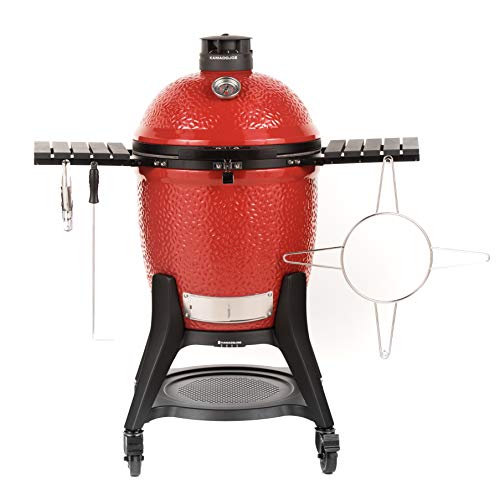
Kamado Joe Classic III
Ceramic, so it holds heat like nothing else here — and weighs what a ceramic oven weighs.
- Temperature range
- 225–750°F
- Cooking area
- 250 sq in
- Grill diameter
- 18 in
Compared
| Spec | TraegerIronwood 885 | Kamado JoeClassic III |
|---|---|---|
| Price band | ||
| Temperature range | 165–500°F | 225–750°F |
| Cooking area | 885 sq in across two tiers | 250 sq in |
| Hopper capacity | 20 lb | — |
| Capacity | 10 chickens, 7 rib racks, or 9 pork butts | — |
| Weight | 175 lb | 280.6 lb |
| Status | Superseded — the current Ironwood is 616 sq in | — |
| Grill diameter | — | 18 in |
| Warranty | — | Limited lifetime |
| Where to buy | Check current price on Amazon | Check current price on Amazon |
These are opposite machines
Most comparisons in this bracket are shades of the same thing. This one is not. The Traeger and the Kamado Joe are built around opposite trades, and once you see which trade you are making, the decision more or less makes itself.
The Traeger buys you capacity and automation, and pays for it with a temperature ceiling. The Kamado buys you versatility, and pays for it with capacity and about 280 pounds of immobility.
Neither is a compromise on the other. They are different answers.
The number that decides it: 500°F versus 750°F
Traeger publishes 165–500°F for the Ironwood 885. Kamado Joe publishes 225–750°F for the Classic III.
Five hundred degrees is roasting heat. It will cook a chicken with decent skin and hold 225°F overnight without you, which is most of what a smoker is for. What it will not do is put a crust on a steak or bake a pizza — those need the top of the Kamado's range, not the top of the Traeger's.
So the real question is not "which is the better smoker". Both smoke well. It is whether this cooker also has to be your grill and your pizza oven.
The number that looks decisive and is not: 885 versus 250
On paper the Traeger has three and a half times the cooking area. That is true, and it is less meaningful than it sounds.
The Kamado Joe's 250 square inches is a single 18-inch circular grate — very close to what that diameter geometrically allows — and Kamado Joe ships a tiered system that adds surfaces above it. The Traeger's 885 is itself spread across two tiers.
So you are not comparing one big surface to one small one. You are comparing two stacked surfaces to one continuous one plus optional stacking.
For a brisket, which is a large flat object, the useful measure is the longest continuous run, not the total. For chickens, where stacking is fine, the total is exactly right. Traeger's own capacity figure is the more honest version of its number: 10 chickens, 7 rib racks, or 9 pork butts.
Weight, and whether it ever moves
Kamado Joe publishes 280.6 lb for the Classic III. That is not a portability statistic, it is a permanence one: decide where it lives before it arrives, because it lives there now.
That mass is also the feature. Ceramic holds heat well enough that the fire needs very little air, which is why a kamado gets through so much less fuel on a long cook than a metal cooker does.
The Traeger is 175 lb — still not something you carry, but a different class of object.
Which will you still own in ten years
This is the comparison nobody makes, and it may be the most useful one.
Kamado Joe gives the Classic III a limited lifetime warranty. Ceramic has nothing electronic in it to fail; the failure modes are dropping it and cracking it.
The Ironwood 885 has a 10-year limited warranty, WiFi, a controller, an auger and a fan — and it has been superseded. Traeger's current Ironwood is a different grill at 616 square inches, and the 885 no longer appears on their pellet grill listing. It is still widely stocked, and it has more grate space than its replacement, which is a genuine argument for buying one. But a connected appliance has a firmware story that a ceramic egg does not.
Who each one is for
Take the Traeger Ironwood 885 if you want barbecue without fire management, and if quantity matters — big cooks, several racks, overnight without setting an alarm. The 500°F ceiling only stings if you expected it to sear.
Take the Kamado Joe Classic III if it has to be the only thing in the garden, or if you want a cooker with nothing in it that can stop working. You are trading capacity and mobility for a machine that does everything, and sips charcoal doing it.
Either way, the smoker calculator will tell you what time to light it, and the stall explains why that estimate is a range rather than a time. Both machines run the same cook charts: a 12 lb brisket at 225°F is 28 hours from lighting to serving on either one — the difference is whether you spend that night watching vents.
Common questions
- Can a Traeger sear a steak?
- Not the Ironwood 885. Traeger publishes a 165–500°F range for it, which is roasting heat. Searing wants considerably more. The Kamado Joe Classic III is rated to 750°F, and that gap is the single most important difference between these two machines.
- Is 250 square inches enough?
- For most households, yes — but it is a single 18-inch grate, and the geometry of an 18-inch circle allows almost exactly that. Kamado Joe ships a tiered system that adds surfaces above it. The Traeger's 885 square inches is spread across two tiers, so neither number is quite what it looks like.
- Which needs more attention during a cook?
- The Kamado. A pellet grill has an auger and a fan holding your number overnight; a ceramic cooker holds heat through mass and vent control, which you set. The ceramic sips fuel by comparison, but it does not run itself.
- Is the Ironwood 885 discontinued?
- It has been superseded. Traeger's current Ironwood is a different grill — 616 square inches and a 22 lb hopper — and the 885 no longer appears on their pellet grill listing or offers a way to buy it directly. It is still widely stocked by retailers, and it has more grate space than the model that replaced it, but it is the previous generation.
Sources
Every figure on this page came from one of these. We have not tested these products ourselves — how we research.
Compared elsewhere
Pellet, Ceramic or Charcoal? Three Smokers Compared on Published Specs
Also covers the Traeger Ironwood 885 and the Kamado Joe Classic III.
Kamado Joe Classic III vs Weber Smokey Mountain 22
Also covers the Kamado Joe Classic III.
The Best Smoker for Beginners Is Cheaper Than You Think
Also covers the Traeger Ironwood 885.