smokers grills
The Best Smoker for Beginners Is Cheaper Than You Think
Mike Ross · How we research · Updated 2026-08-30 · 5 min read
The picks

Best first smoker
Weber Smokey Mountain Cooker 22"
The cheapest way into genuinely good barbecue. No electronics to fail, and it never goes out of date.
- Cooking area
- 726 sq in across two grates
- Diameter
- 22 in
- Dimensions
- 48.5 in H × 23 in W × 24 in D
Best if you want one cooker
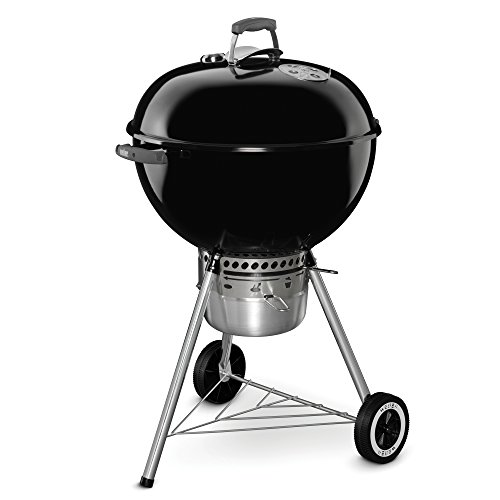
Weber Original Kettle Premium 22"
The default charcoal grill, and a competent smoker with the vents half shut.
- Cooking area
- 363 sq in
- Diameter
- 22 in
- Dimensions
- 39.5 in H × 22.5 in W × 27 in D, lid closed

Best if you never want to touch the fire
Traeger Ironwood 885
The outgoing Ironwood, and the better buy for it — more grate space than the model that replaced it, for less money.
- Temperature range
- 165–500°F
- Cooking area
- 885 sq in across two tiers
- Hopper capacity
- 20 lb
Compared
| Spec | WeberSmokey Mountain Cooker 22" | WeberOriginal Kettle Premium 22" | TraegerIronwood 885 |
|---|---|---|---|
| Price band | |||
| Cooking area | 726 sq in across two grates | 363 sq in | 885 sq in across two tiers |
| Diameter | 22 in | 22 in | — |
| Dimensions | 48.5 in H × 23 in W × 24 in D | 39.5 in H × 22.5 in W × 27 in D, lid closed | — |
| Warranty | 10 years on bowl, lid and centre ring | 10 years on bowl and lid, no rust or burn through | — |
| Cooking grate | — | Plated steel, hinged | — |
| Temperature range | — | — | 165–500°F |
| Hopper capacity | — | — | 20 lb |
| Capacity | — | — | 10 chickens, 7 rib racks, or 9 pork butts |
| Weight | — | — | 175 lb |
| Status | — | — | Superseded — the current Ironwood is 616 sq in |
| Where to buy | Check current price on Amazon | Check current price on Amazon | Check current price on Amazon |
Most first-smoker advice is written by people selling expensive smokers
Search this question and you will be shown a pellet grill within three scrolls. Not because it is the right first smoker — because it is the one that pays the most.
Here is the version the specifications support. The thing that makes barbecue is holding a low temperature for a long time. A charcoal smoker does that with mass and a vent, and neither of those costs money. What the expensive machines sell you is not better barbecue. It is not having to pay attention.
That is a real thing to want. It is just not the same thing as quality, and you should know which one you are buying.
The three honest answers
Three cookers, three genuinely different trades. Every figure below is the manufacturer's own.
If you want a smoker: the Weber Smokey Mountain 22"
726 square inches across two grates, a 22-inch diameter, and a ten-year warranty on the bowl, lid and centre ring against rust and burn-through.
There is nothing on it that can stop working. No controller, no auger, no fan, no firmware. The design has barely changed in decades, which is what happens when something is finished rather than iterated.
It is also the answer to the size question. A 22-inch grate takes a full packer brisket; an 18-inch one often will not.
If you want one cooker: the Weber Original Kettle 22"
363 square inches on the same 22-inch grate, a hinged plated-steel grate for adding fuel mid-cook, and the same ten-year bowl and lid warranty.
Half the cooking area of the Smokey Mountain — exactly half, as it happens — and it does something the Smokey Mountain cannot do at all: grill. Direct heat, live coals, a steak.
You can smoke on it with a two-zone fire, and plenty of people never buy anything else.
If you never want to touch the fire: a pellet grill
The Traeger Ironwood 885 gives you 885 square inches, a 20 lb hopper, a 165–500°F range and WiFi. Set a number, walk away, sleep.
That is genuinely valuable on a fourteen-hour cook, and nobody should pretend otherwise. Two things to know before you buy one as your first smoker:
- It will not sear. 500°F is roasting heat. If you also want steak, this is not your only cooker.
- It hides the fire. You will make good barbecue quickly and learn slowly. Whether that matters depends on whether you want dinner or a hobby.
What actually decides it
Not the brand. Three questions, in this order.
Do you want to grill as well? If yes, start with the kettle. Buying a dedicated smoker and then cooking burgers on it is the expensive mistake, not the other way round.
Will you be there? A charcoal smoker wants a look every hour or two. A pellet grill does not. If your cooking happens around a full Saturday, that is worth real money. If it happens on a day you are home anyway, it is worth less than the price gap.
Do you want to learn, or do you want dinner? Both are legitimate. Charcoal teaches you what airflow does because it makes you do it. A pellet grill teaches you very little, on purpose.
The one thing you should not economise on
A thermometer.
Every cook time on this site — and there are ninety — is a range, not a number. The same 12 lb brisket finishes hours apart between cooks. Grade, fat, airflow and weather all move it, and no chart can see any of them.
The only thing that closes that range is measuring the inside of the meat. A smoker without a thermometer is a guess with a lid on it — and a thermometer is the cheapest thing on this entire page, by a wide margin.
For poultry it stops being about quality: 165°F is a USDA food-safety threshold, not a preference, and you cannot judge it by eye.
Start here
Buy the Smokey Mountain if you want to smoke, the Kettle if you want one cooker that does everything, and a pellet grill only if the fire is a chore rather than the point.
Then work out what time to light it. The smoker calculator turns your cut, weight and serve time into an hour to start, and the printable chart puts every cut and temperature on one page you can take outside.
Your first cook should be a pork shoulder, and a small one run hot. A 6 lb butt at 275°F is six to seven and a half hours at the grate — light it at 8:30am and you are eating at six, without an alarm clock or an overnight.
Take the same shoulder up to 8 lb and drop to 225°F and it becomes an eighteen-hour plan starting at midnight. Same cut, same cooker, completely different day. That is the lesson worth learning first, and pork shoulder is the cut that forgives you while you learn it.
Common questions
- Do I need an expensive smoker to make good barbecue?
- No. Temperature control is what makes barbecue, and a charcoal smoker holds temperature through mass and vent position — neither of which costs money. What money buys is automation: a pellet grill holds your number without you. That is convenience, not quality.
- Can I smoke on a grill I already own?
- If it has a lid, almost certainly. Bank the coals to one side, put the food on the other, and you have a two-zone fire. That is the same principle every offset smoker uses. Try it before spending anything — you may find you do not need a second cooker.
- Is a pellet grill a good first smoker?
- It is the easiest, and that is a real argument. But it hides what the fire is doing, so you learn less, and it costs several times what a charcoal smoker does. If you want barbecue this weekend with no learning curve, buy one. If you want to understand what you are doing, do not start there.
- What size should I buy?
- Bigger than you think, in one dimension only. A brisket is a large flat object, so what matters is the longest continuous run of grate, not the total area. A 22-inch grate takes a full packer. An 18-inch one often does not.
- What else do I actually need?
- A thermometer, and almost nothing else. Every cook time published anywhere is a range, and the only thing that closes it is measuring the inside of the meat. Fuel, a chimney starter and something to wrap in come after that.
Sources
Every figure on this page came from one of these. We have not tested these products ourselves — how we research.
Compared elsewhere
Weber Original Kettle vs Weber Smokey Mountain
Also covers the Weber Original Kettle Premium 22" and the Weber Smokey Mountain Cooker 22".
Pellet, Ceramic or Charcoal? Three Smokers Compared on Published Specs
Also covers the Weber Smokey Mountain Cooker 22" and the Traeger Ironwood 885.
Gas vs Charcoal Grill: What the Published Specs Actually Say
Also covers the Weber Original Kettle Premium 22".
Kamado Joe Classic III vs Traeger Ironwood 885
Also covers the Traeger Ironwood 885.