smokers grills
Kamado Joe Classic III vs Weber Smokey Mountain 22
Mike Ross · How we research · Updated 2026-09-06 · 4 min read
The picks
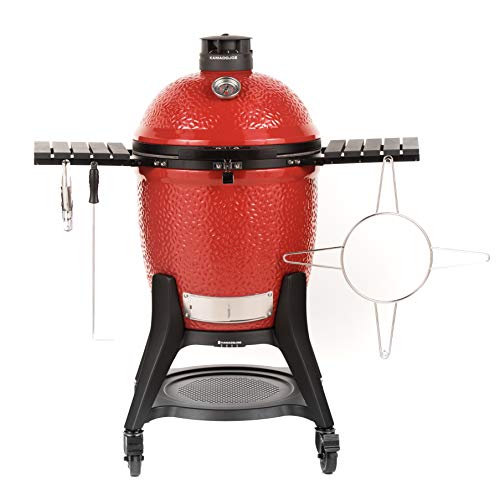
Best for one cooker that also sears and bakes, backed for a lifetime
Kamado Joe Classic III
Ceramic, so it holds heat like nothing else here — and weighs what a ceramic oven weighs.
- Temperature range
- 225–750°F
- Cooking area
- 250 sq in
- Grill diameter
- 18 in

Best for capacity — nearly three times the published cooking area
Weber Smokey Mountain Cooker 22"
The cheapest way into genuinely good barbecue. No electronics to fail, and it never goes out of date.
- Cooking area
- 726 sq in across two grates
- Diameter
- 22 in
- Dimensions
- 48.5 in H × 23 in W × 24 in D
Compared
| Spec | Kamado JoeClassic III | WeberSmokey Mountain Cooker 22" |
|---|---|---|
| Price band | ||
| Temperature range | 225–750°F | — |
| Cooking area | 250 sq in | 726 sq in across two grates |
| Grill diameter | 18 in | — |
| Weight | 280.6 lb | — |
| Warranty | Limited lifetime | 10 years on bowl, lid and centre ring |
| Diameter | — | 22 in |
| Dimensions | — | 48.5 in H × 23 in W × 24 in D |
| Where to buy | Check current price on Amazon | Check current price on Amazon |
This comparison is usually framed as ceramic craftsmanship against a steel workhorse, which makes the expensive cooker sound like the more capable one.
The published capacity figures point the other way, hard.
726 against 250
Weber publishes 726 square inches across two grates for the Smokey Mountain 22. Kamado Joe publishes 250 square inches for the Classic III.
| Classic III | Smokey Mountain 22 | |
|---|---|---|
| Cooking area | 250 sq in | 726 sq in across two grates |
| Grill diameter | 18 in | 22 in |
| Weight | 280.6 lb | not published |
| Dimensions | not published | 48.5 × 23 × 24 in |
| Temperature range | 225–750°F | not published |
| Warranty | limited lifetime | 10 years, bowl, lid and centre ring |
The Weber has close to three times the cooking area. That is not a marginal difference to be traded against build quality — it is the difference between fitting one pork butt and fitting four.
The geometry explains it. The Classic III is an 18-inch grill; the Smokey Mountain is 22 inches, and it has two of them. A circle grows with the square of its radius, so 22 inches against 18 is already about half again the area per level, and then Weber stacks a second one on top.
What the Classic III publishes that Weber does not
Kamado Joe commits to a 225 to 750°F operating range. Weber publishes no temperature range for the Smokey Mountain at all.
This matters, and it is worth being precise about why. It does not mean the Smokey Mountain is limited to low temperatures — an absent specification is absent, not low. It means only one of these two manufacturers will tell you what its cooker is rated to do, and that one is Kamado Joe.
If you want a cooker that sears steak and bakes pizza as well as smoking, the Classic III is the one with a published ceiling that covers it. That is a real advantage, and it is the honest version of the versatility argument — not "the Weber only reaches 350°F", which no source supports.
Kamado Joe also publishes a limited lifetime warranty against Weber's ten years on the bowl, lid and centre ring. On paper that is the stronger term, and it is the clearest place the Classic III earns its price.
The weight is a decision, not a detail
Kamado Joe publishes 280.6 lb for the Classic III.
That is a permanent installation. It goes where you put it, on something that can carry it, and it stays there. Weber does not publish a weight for the Smokey Mountain 22, but it does publish the dimensions — 48.5 inches tall, 23 wide, 24 deep — a narrow cylinder that comes apart into a bowl, a centre ring and a lid.
Neither company publishes a burn time, a fuel consumption figure, or a cold-weather performance number. Ceramic genuinely stores more heat than sheet steel, and that is physics rather than marketing. How many hours it buys you on one load of charcoal is not something either manufacturer states, so we will not put a number on it.
Which one to buy
Buy the Smokey Mountain 22 if you are buying a smoker. It publishes almost three times the cooking area, it comes apart to move, and capacity is what people run out of first. Nothing in the published specifications suggests it smokes less well; it simply holds far more.
Buy the Classic III if you want one cooker instead of two. It is the only one of the pair with a published temperature range that reaches searing and pizza heat, and the only one with a lifetime warranty. You are paying for range and for the ceramic, and you are giving up two thirds of the cooking area to get them.
What should not decide it is a temperature ceiling for the Weber, because Weber does not publish one.
Common questions
- Which one holds more food?
- The Weber Smokey Mountain 22, by a wide margin. Weber publishes 726 square inches across two grates. Kamado Joe publishes 250 square inches for the Classic III, on an 18-inch grill. That is close to three times the cooking area for the Weber, and it is the single largest difference between them.
- Can the Smokey Mountain sear steaks or bake pizza?
- Weber does not publish a temperature range for the Smokey Mountain 22, so we cannot tell you what it tops out at. Kamado Joe does publish one for the Classic III — 225 to 750°F — which is why the Classic III is the one described as a searing and pizza cooker here. An absent specification is not evidence of a low ceiling; it is an absent specification.
- How heavy is each one?
- Kamado Joe publishes 280.6 lb for the Classic III, which makes it a fixture rather than something you move. Weber does not publish a weight for the Smokey Mountain 22. Weber does publish its dimensions: 48.5 inches high by 23 inches wide by 24 inches deep.
- Which has the better warranty?
- Kamado Joe publishes a limited lifetime warranty on the Classic III. Weber publishes ten years on the Smokey Mountain’s bowl, lid and centre ring. A lifetime term is the stronger of the two on paper, and it is one of the few places the more expensive cooker is straightforwardly ahead on a published number.
- Is ceramic better than steel in cold weather?
- Ceramic is thicker and stores more heat than sheet steel, which is why kamado cookers are described as insulated. Neither manufacturer publishes a cold-weather performance figure, a fuel consumption rate, or a burn time, so any specific claim — twenty hours on one load, unaffected by wind — is somebody’s experience rather than a specification.
- Which is the better first smoker?
- If the goal is smoking specifically, the Smokey Mountain gives you far more capacity for far less outlay, and capacity is the thing beginners run out of first. The Classic III makes sense when you want one cooker that also sears and bakes, and you are willing to pay for the range.
Sources
Every figure on this page came from one of these. We have not tested these products ourselves — how we research.
Compared elsewhere
Pellet, Ceramic or Charcoal? Three Smokers Compared on Published Specs
Also covers the Weber Smokey Mountain Cooker 22" and the Kamado Joe Classic III.
Kamado Joe Classic III vs Traeger Ironwood 885
Also covers the Kamado Joe Classic III.
Masterbuilt 30 Digital Electric vs Weber Smokey Mountain 22
Also covers the Weber Smokey Mountain Cooker 22".
Oklahoma Joe's Laredo 1100 vs Weber Smokey Mountain 22
Also covers the Weber Smokey Mountain Cooker 22".