
Alpha Grillers Instant Read Thermometer
The cheapest way to stop guessing. Every temperature on this site assumes you can actually measure one.
- Response time
- 1–2 seconds
- Calibration
- Pre-calibrated, with recalibration available
Mike Ross · How we research · Updated 2026-08-30
At the grate
9h – 11h 42m
Rest
21m – 45m
Cook plus rest
9h 21m – 12h 27m
Plan for
12h 27m
The long end, always
Work backwards from the long end. To serve an 18 lb turkey at 6pm on a Saturday, light the smoker around Saturday 5:33am — 12h 27m earlier.
That asymmetry is deliberate. Finished barbecue sits in a cooler for hours and arguably improves; an unfinished one at dinner time is not a problem you can solve. Being early is recoverable, being late is not.
The smoker calculator turns your own serve time into a clock time, and handles weights and temperatures between the ones charted here.
At 12h 27m you are not staying awake for this. There are two workable plans and one bad one.
Start the evening before and sleep through the long middle stretch — a pellet grill holds its own temperature, which is what makes this the common choice. Or start at dawn and hold it: finish in the afternoon, wrap it, and rest it in a dry cooler until dinner. A well-packed cooler holds serving temperature for hours, and the rest does the meat good.
The bad plan is starting in the morning and hoping. That is the version where dinner is at 11pm.
Sleeping through it assumes something is watching. An instant-read probe only answers when you open the lid, so for the overnight stretch the tool is a leave-in one: the ThermoWorks Signals runs three meat probes and an air probe at once and sends the readings to your phone over Wi-Fi, so both the turkey and the smoker around it are on the screen by the bed.
The same turkey can finish hours apart between cooks. Grade, fat, airflow, ambient temperature and how often the lid comes off all move the number, and a calculator can see none of them.
So the figures above are a window, not a prediction. A page that told you “11h 42m exactly” would feel more precise and be less true.
USDA FSIS — Turkey: Alternate Routes to the Table publishes one rate for the whole 225–300°F smoker band: “Estimate 20 to 30 minutes per pound if using a smoker.” Our figure at 275°F runs to 39 minutes a pound, past USDA's 30. That extra is ours, not USDA's: we split the rate by temperature and plan each figure from the long side, because a bird that finishes early can rest and one that finishes late cannot be hurried. Read it.
Pull between 165–175°F internal. The USDA safe minimum for this cut is 165°F, which is a food-safety floor rather than a target.
Below 275°F the skin does not render properly. Breast to 165°F, thigh to 175°F.
That window is an internal temperature, and it is not what the lid gauge shows — a dome thermometer reads the air under the lid, not the centre of the meat. Hitting a 10°F window means measuring the meat itself, which is what an instant-read probe is for.
Safe minimums from the USDA FSIS Safe Minimum Internal Temperature Chart.
On a pellet grill at 275°F, this cook burns roughly 11.3–20.5 lb of pellets — so have two 20 lb bags on hand. Cold and windy days push that higher.
For an offset or a charcoal cooker there is no figure here, and that is on purpose. Consumption depends on firebox size, wood species, split moisture and how the pit is run, and a number would be a guess wearing an estimate’s clothes.
At the long end that is more than the smallest hopper on the grills we compare, which publish 13.5 lb upwards — so this cook can outrun a single load. The pellet grill comparison has the capacities.
We chart turkey from 275–325°F. Outside that range we have nothing to work from and will not extrapolate one.
| Smoker temp | Cook | Plan, with rest |
|---|---|---|
| 275°F — this page | 9h – 11h 42m | 12h 27m |
| 300°F | 7h 12m – 9h 54m | 10h 39m |
| 325°F | 6h 18m – 9h | 9h 45m |
Not working to a set weight? How Long to Smoke Turkey at 275°F gives the hours per pound instead, for any weight.
Every figure on this page is a range, and the only thing that closes it is measuring the internal temperature — more so on a cut this quick, where the window between done and dry is narrow. The leave-in probe is for the hours you are asleep, when nobody is opening the lid to check.
The cheapest way to stop guessing. Every temperature on this site assumes you can actually measure one.

Four-channel standalone WiFi and Bluetooth BBQ temperature monitor with commercial accuracy and real-time cloud graphing.
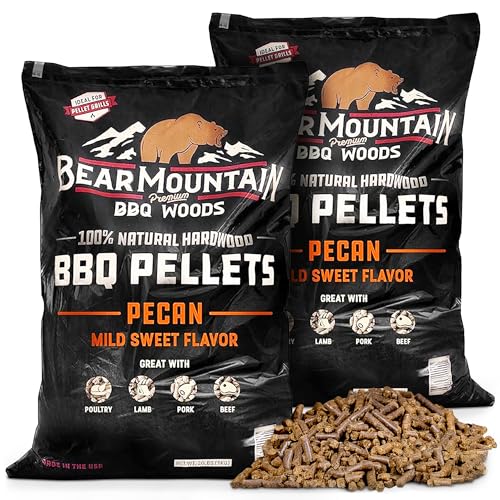
Nutty, mildly sweet aroma that delivers deep reddish mahogany color without overpowering long brisket smokes.
Your weight and your serve time, turned into the hour you light it.
USDA's 225–300°F smoker band, and the four days of thawing that have to happen first.
This page assumes a thawed bird. That takes about a day per 4–5 lb in the fridge, so it is the part to work out first.
The budget probe this page recommends, against one that publishes ±0.5°F accuracy and ships a calibration certificate — and when that difference matters.
This cook burns 11.3–20.5 lb of pellets. Where that figure comes from, and why charcoal cannot be estimated the same way.
Which hardwoods suit turkey, and which overpower it.
Every figure here assumes you can hold a steady temperature and read an internal one. This is how.
The same figures for every cut, weight and temperature we have a chart for.
Every cut and temperature on one page, for when you are outside and not holding a phone.