Guide
How to Use a Smoker: A Beginner's Complete Guide
Mike Ross · How we research · Updated 2026-08-30 · 5 min read
Smoking is low-temperature, indirect convection cooking in the presence of vaporized hardwood combustion byproducts. Unlike high-heat grilling (which relies on direct thermal radiation to cook food in minutes), smoking gently breaks down tough collagen into succulent gelatin over several hours without drying out muscle fibers.
Whether you operate a vertical charcoal bullet, a split-log offset, an automated pellet grill, or a digital electric cabinet, mastering three core physical variables guarantees tender, deeply flavorful barbecue every time.
1. The Science of Smoke: Thin Blue vs White Smolder
Not all smoke tastes good. The quality of your fire determines whether your food tastes sweet and savory or harsh and bitter.
COMBUSTION PHASES & SMOKE QUALITY

[ Incomplete Smolder (Poor Airflow) ] ──> Thick Billowing White Smoke (Bitter Creosote & Soot)
[ Clean Active Combustion (Hot Bed) ] ─> Thin Faint Blue Smoke (Aromatic Guaiacol & Syringol)
- Dirty White Smoke: Occurs when wood smolders without sufficient oxygen or when unseasoned green wood is thrown onto a cold coal bed. It contains large unburned soot particles and heavy creosote, leaving an acrid, tongue-numbing film on meat.
- Thin Blue Smoke: Occurs when seasoned hardwood combusts with ample oxygen at temperatures above 600°F. The visible smoke is almost transparent with a faint blue tint, releasing sweet volatile aromatics that season food cleanly.
2. Core Operational Steps for Any Smoker
THE 5-PHASE SMOKING WORKFLOW

  [ 1. Fuel & Fire Setup ] ──> Establish hot charcoal base or prime pellet firepot
             │
  [ 2. Temperature Stabilization ] ──> Lock cooking chamber between 225°F and 275°F
             │
  [ 3. Seasoning & Meat Placement ] ──> Apply dry rub, insert probe, place fat-side to heat
             │
  [ 4. Managing the Stall ] ──> Monitor plateau (~150–170°F), wrap in butcher paper if needed
             │
  [ 5. Probe Tenderness & Rest ] ──> Check probe-tender feel (~200–205°F) & rest 1–2 hours
Step 1: Pre-Heating, Grate Prep, and Temperature Stabilization
Never place cold meat into a cold, uncleaned, or wildly fluctuating smoker.
- Light your fire (charcoal chimney, electric element, or auger cycle).
- Clean your grates down to bare metal. If you share equipment between different diets or are hosting guests with dietary allergies, mechanical scraping and high-heat degreasing are mandatory. Consult clinical recommendations on celiac safety thresholds and allergen cross-contact standards to prevent dangerous protein transfer on shared iron grates.
- Allow the cooking chamber to reach your target temperature (typically 225°F to 250°F for brisket and pork shoulder, or 275°F for poultry).
- Wait 15 to 20 minutes until the metal walls absorb heat and the exhaust chimney emits faint blue or clear heat shimmer.
Step 2: Airflow and Heat Management by Cooker Type
- Charcoal Water Smokers (e.g. Weber Smokey Mountain): Fill the bottom water pan with warm water to act as a thermal buffer. Use bottom intake vents to regulate temperature: close vents to restrict oxygen and lower heat; open vents to raise heat. Keep the top exhaust vent 100% open to maintain continuous draft.
- Offset Smokers (e.g. Oklahoma Joe's Laredo 1100): Build a solid base of lump charcoal in the firebox, then add pre-heated dry hardwood split logs one at a time every 45 to 60 minutes. Keep the exhaust stack wide open and adjust the side air intake damper to balance draft velocity and temperature.
- Pellet Smokers (e.g. Traeger Ironwood): Fill the hopper with food-grade hardwood pellets, set the digital PID controller to your desired cooking temperature, and ensure the induction fan and drip tray are clear of debris.
- Digital Electric Smokers (e.g. Masterbuilt 30"): Set the digital temperature on the control panel. Add a handful of dry wood chips into the patented side woodchip loader every 60 to 90 minutes without opening the main chamber door.
3. Managing the Stall and Wrapping
Around an internal meat temperature of 150°F to 170°F, large cuts like pork butt and beef brisket will stop rising in temperature for two to four hours. This phenomenon is called the stall, caused by evaporative cooling as moisture pools on the surface and evaporates at the exact rate heat enters the meat.
- Option A (Ride it Out): Leave the meat unwrapped. The cook takes longer, but produces an intensely dark, crunchy bark.
- Option B (The Texas Crutch): Wrap the meat tightly in breathable pink butcher paper or aluminum foil. Wrapping halts evaporative cooling, pushing internal temperature steadily through the stall while preserving internal moisture.
4. Doneness: Cooking by Internal Temperature, Not the Clock
Meat is done when connective tissue melts, not when a predetermined timer rings.
- Internal Target: Collagen breakdown accelerates dramatically above 195°F. Beef brisket and pulled pork reach peak tenderness between 200°F and 205°F.
- The Probe Test: Insert an instant-read thermometer probe like the ThermoWorks Thermapen ONE into the thickest part of the meat. It should slide in with zero resistance, feeling like a warm knife sliding into soft butter.
- The Essential Rest: Always rest large barbecue cuts in an insulated cooler wrapped in towels for 1 to 2 hours before slicing. Resting allows muscle fibers to cool slightly and reabsorb rendered fats, keeping meat juicy rather than spilling moisture onto the cutting board.
Smoker Troubleshooting Quick Reference
| Symptom | Root Cause | Immediate Fix |
|---|---|---|
| Smoker temperature running too hot | Too much oxygen entering firebox | Close bottom intake air dampers halfway; leave top exhaust open |
| Smoker temperature dropping rapidly | Spent ash choking air intake or low fuel | Rake bottom ash grates with fire poker; add fresh unlit fuel |
| Bitter, stinging taste on meat bark | Smoldering wood / dirty white smoke | Open dampers to provide more oxygen; ensure firewood is seasoned |
| Dry, tough sliced meat | Pulled off before collagen melted or sliced without resting | Cook until probe slides like warm butter; rest wrapped in cooler 60+ min |
Gear mentioned

Weber Smokey Mountain Cooker 22"
The cheapest way into genuinely good barbecue. No electronics to fail, and it never goes out of date.
- Cooking area
- 726 sq in across two grates
- Diameter
- 22 in
- Dimensions
- 48.5 in H × 23 in W × 24 in D

Oklahoma Joe's Laredo Series 1100
A traditional barrel offset smoker with 1,100 square inches of total space and a dedicated firebox for true split-log smoking.
- Cooking space
- 1,100 sq in total cooking space
- Chamber style
- Barrel-style chamber with dedicated offset firebox
- Airflow control
- Side air damper and adjustable smokestack
Operating range
Traeger Ironwood
The current Ironwood. Less grate than the 885 it replaced, and the one Traeger still sells.
- Temperature range
- 165-500°F
- Cooking area
- 616 sq in — 396 on rack one, 220 on rack two
- Hopper capacity
- 22 lb
Amazon lists the older Ironwood 885 but not the current Ironwood. This goes to Traeger, who sell it directly.
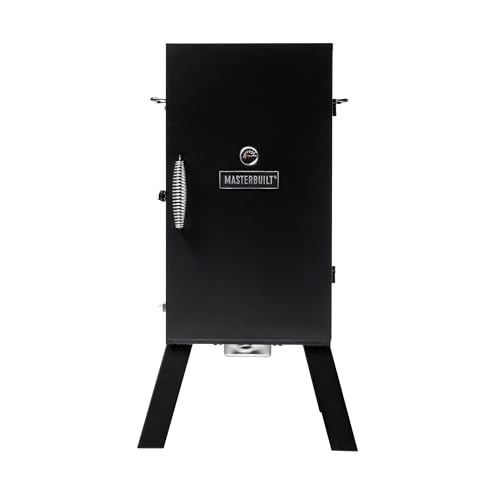
Masterbuilt 30-Inch Digital Electric Smoker
Set-and-forget vertical electric smoker with digital temperature control and a patented side woodchip loader.
- Cooking area
- 710 sq in across four chrome-coated smoking racks
- Temperature range
- 100–275°F
- Wood loading
- Patented side woodchip loader (add chips without opening smoker door)

ThermoWorks Thermapen ONE
The one that publishes its accuracy. Under a second, and a calibration certificate in the box.
- Accuracy
- ±0.5°F in key temperature ranges
- Response time
- Under 1 second
- Measuring range
- -58 to 572°F
Common questions
- What temperature should a beginner smoker run at?
- Most barbecue cuts like pork shoulder, ribs, and brisket cook best between 225°F and 250°F, allowing connective tissue to melt into gelatin without evaporating muscle moisture.
- How do you know when smoked meat is done?
- Meat is done when an instant-read probe inserts with zero resistance like warm butter, typically around 200°F to 205°F for collagen-rich cuts like brisket and pork butt.
Sources
Every figure on this page came from one of these. We have not tested this equipment ourselves — how we research.
Compared elsewhere
Masterbuilt 30 Digital Electric vs Weber Smokey Mountain 22
Also covers the Masterbuilt 30-Inch Digital Electric Smoker and the Weber Smokey Mountain Cooker 22".
Oklahoma Joe's Laredo 1100 vs Weber Smokey Mountain 22
Also covers the Oklahoma Joe's Laredo Series 1100 and the Weber Smokey Mountain Cooker 22".
Offset vs Pellet Smoker: Airflow, Labor, and Flavor Compared
Also covers the Oklahoma Joe's Laredo Series 1100 and the Traeger Ironwood.
Electric Smoker vs Pellet Grill: Masterbuilt 30 vs Pit Boss Carbon 700
Also covers the Masterbuilt 30-Inch Digital Electric Smoker.